











Chris Chelios Retires After Nearly 30 Years

September 1, 2010

Posted by: HockeyMonkey.com

Categories: Articles

Tags: , , , ,

Chris Chelios Retires After Nearly 30 Years

A career spanning nearly three decades is quite a feat in the sports world!

The 48-year old Chris Chelios, who was drafted in the second round by the Montreal Canadiens in 1981, has decided to hang up his skates for good. The longest-tenured defenseman in NHL history made the announcement at a news conference on Tuesday.

The defenseman ends a dynamic career, leaving with 26 NHL seasons, three Stanley Cups and three Norris Trophies… Not to mention 185 goals and 763 assists. Beyond the NHL, Chelios has represented the United States in four Olympic games, three Canada Cups and two World Cup of Hockey events.

Chelios accepted a position with the Detroit Red Wings on Tuesday to become an Advisor to Hockey Operations and was adamant that there will be no comeback attempts. “I’m not going to leave the door open,” Chelios said. “I’m 100-percent sure that this is it. I know that I’ll never play in the NHL again. It’s not a hard decision. I couldn’t have played any longer than I did. I accomplished what I wanted to. Basically, there’s nothing left.”

  • Share/Bookmark

Read More » No Comments

MonkeySports Superstore Opening in Woodbridge, NJ!

August 27, 2010

Posted by: HockeyMonkey.com

Categories: Events

Tags: , , , , , ,

MonkeySports Superstore Opening in Woodbridge, NJ!

Finally! It’s almost here the MonkeySports Superstore will be opening in Woodbridge, NJ in September. We started our first MonkeySports Superstore in 1999 in Santa Ana, CA. Our stores are dedicated to providing great customer experiences, great prices and the best products to players and teams who demand quality equipment. If you live in or near Woodbridge you won’t be dissappointed. Stop in and see the new store!

  • Share/Bookmark

Read More » No Comments

How to Tape Your Hockey Stick Blade

What does tape do?
The easiest and most effective thing you can do to prolong the life of your hockey stick blades is to tape and wax them very well. Since you naturally lose grip on the puck if your blades are wet, taping the blade of your stick prevents moisture from building up on the blade and keeps the puck from sliding off.

How to Tape a Hockey Stick Blade
Decide whether you prefer to tape from toe-to-heal (more resistance) or heal-to-toe (less resistance). There’s no right or wrong way. Wind the tape around the blade, overlapping layers by about half the width of the tape as you go.

Once your hockey stick blade has been taped, take a puck and rub it along the tape area, in the heel to toe direction. This will create a smooth surface for the newly attached tape and will also bind it well with the blade. Apply a thin layer of the stick wax to the blade area which you have just taped and the bottom of the blade (the part that comes in contact with the ice). The layer of wax makes the bottom of the blade slick and also provides a watertight layer of protection to keep the tape from unraveling due to moisture. Wax increases the life of the tape by preventing water from settling on the tape. It also helps while you take shots, by reducing friction between the ice and your stick blade while striking the puck.

Need Hockey Tape? Shop Hockey Tape

  • Share/Bookmark

Read More » No Comments

Tomas Kaberle returns as a Maple Leaf

Tomas Kaberle returns as a Maple Leaf for his 12th NHL season as the trade window closed Sunday night.

The hockey world has been holding it’s collective breath for Toronto’s decision regarding Tomas Kaberle. The Sunday night deadline came and went without official word, leaving Kaberle a Maple Leaf for the time being. The Leafs had until midnight on Sunday to trade Kaberle, at which point his no-trade clause returned.

Toronto general manager Brian Burke gave an exclusive statement via the team’s official website after the trade window closed:
“The hockey club confirms this evening that Tomas Kaberle remains a Leaf. While a number of Clubs made offers to trade for Tomas, none of them reflected Tomas’s value to our team. I understand a period like this is stressful to the player, and we are pleased that there is a resolution, and we can all continue to prepare for the coming season.”

So for now, it looks as though the 32-year-old defenseman Tomas Kaberle will stay with Toronto. Many say that a trade is imminent since he will become an unrestricted free agent following the 2010-11 season. Kaberle has played his entire career with Toronto. He was selected in the eighth round of the 1996 draft. Kaberle is the longest serving current Maple Leaf player.

  • Share/Bookmark

Read More » No Comments

August 9, 2010

Posted by: HockeyMonkey.com

Categories: Tips

Tags: , ,

Why Players “Bake” Their Skates

Finding a pair of ice hockey skates that fit perfectly right from the store is rare indeed. Since feet are naturally different, it stands to reason that skates will fit differently from person to person. Hockey skates are made to be stiff and supportive but can be uncomfortable when they haven’t been broken in. Break-in time varies from model to model but typically takes between 6 to 10 hours of hard skating.

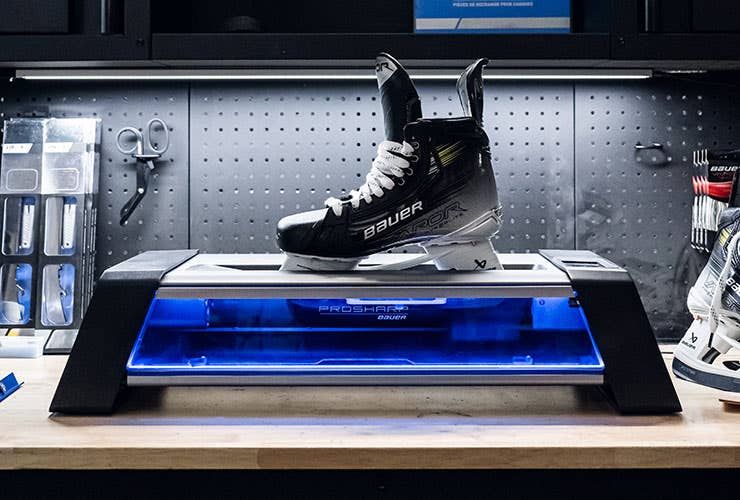
Skates are typically made with a memory foam that conforms to your foot over time, resulting in the “perfect” fit. This thermo-formable foam responds to heat and becomes soft enough to be reshaped for a customized fit. Similar to breaking in a baseball glove, the “baking” process makes the skate pliable to give players a more comfortable fit quicker and without the discomfort of blisters and pressure points.

Most hockey pro shops have a skate oven that is recommended for the process. Baking your hockey skates in your home oven is not recommended because the skates can be damaged if they are improperly baked. Baking your skates at home will also void the manufacturer’s warranty.

  • Share/Bookmark

Read More » No Comments

Marty Turco signs with the Chicago Blackhawks

August 2, 2010

Posted by: HockeyMonkey.com

Categories: Articles

Tags: , , , ,

Marty Turco signs with the Chicago Blackhawks

Chicago Blackhawks have signed Marty Turco to a one-year/$1.3 million contract.

Negotiations between goaltender Antti Niemi and the Chicago Blackhawks have reached the end. With the Blackhawks desperate to stay under the salary cap, it was decided that Niemi’s one-year/$2.75 million contract (awarded in arbitration) was just too much for them to afford.

The focus turned to Marty Turco, who at half the cost of Niemi, seemed a sweeter deal for the team. The Blackhawks are hoping that Turco’s 22-20-11 record last season will improve with Chicago’s superior defense.

  • Share/Bookmark

Read More » No Comments

Finding the Right Hockey Stick Flex For You

So what is a hockey stick flex anyway?
A flex is a measure of how flexible or how stiff a hockey stick is when force is applied to it. Since the flex rating indicates how many pounds of force it takes to flex the stick one inch, you should know that some sticks are significantly easier to bend than others. Finding the right flex is somewhat of a preference based on skill level. The appropriate flex varies among players, so you’ll want to try out different options.

The higher the flex, the stiffer the stick. The stiffer the stick, the more power you will have behind your shot. Keep in mind that if a stick is so stiff that you cannot flex it properly with your shooting motion, then your effectiveness will be limited.

How does flex impact play?
Essentially, when a player takes a shot, the stick bends a bit to turn the hockey stick into a spring of sorts. When the stick unbends, the “spring” is released and the energy accelerates the puck. You want a stick that offers resistance while still allowing you to flex the stick easily.

What flex is right for me?
Ideally, the flex should be approximately one half of your body weight. Players over 150 pounds should use a stick with at least 75 flex. Obviously, this is just a guideline and your own comfort and ability to use the stick effectively should dictate the flex you use. Players with above average strength for their size should consider a stiffer stick while new players may want to go down a level. An average flex is 85.

If you are able to test the stick in a Pro Shop, use your normal hand position on the stick and hold the stick with the blade on the floor. Hold your top hand stationary and push down and forward with your lower hand. You should be able to flex the stick about an inch without using all your effort. If you are unable to flex the stick this much, then the flex is too high.

Women and smaller players tend to benefit from an intermediate stick. Intermediate sticks are similar in size to senior sticks but have a lighter flex.

The most common stick flexes are:
Youth: 40 flex
Junior: 50 flex
Intermediate: 60-75 flex
Regular: 85 flex
Stiff: 100 flex
Extra stiff: 110 flex

Remember that finding the right stick is a personal choice. Guidelines are just that… guidelines. Be sure to try different styles until you find one that fits your playing style and level of play.

  • Share/Bookmark

Read More » No Comments

NHL rejects Kovalchuk deal

It’s hard to argue with the NHL’s reasoning…

With a 17-year, $102 million contract on the line, Ilya Kovalchuk has been the main topic of conversation within the hockey world. The fact that this deal with the New Jersey Devils was rejected by the NHL for salary cap circumvention only sparks more controversy and more debate. The contract was rejected because of the front loaded design. Kovalchuk stood to earn much less at the end of the contract to lower the cap hit.

At issue is whether or not Kovalchuk can play out the terms of the contract. At 27, it’s not impossible for him to play until age 42. After all, Chris Chelios of the Atlanta Thrashers has continued to play at the age of 48.

But by letting this deal go through, would the NHL set a nasty precedent that would allow teams to circumvent the salary cap? What’s to stop the next team from giving a player a 25 year contract with a good portion being paid up front? It’s hard to blame the player and team for wanting a contract like this, but with so many people watching, the likelihood of a reversal is minimal.

  • Share/Bookmark

Read More » No Comments

Required Hockey Equipment

Ice Hockey is a pretty rough sport that consists of twelve players fighting over a little 3″ puck that can be launched like a missile. Add skates and big sticks and you have the potential for injury. Playing over ice also increases the risk as ice can cause both shock and serious internal injuries.

The following specialized ice hockey equipment pieces are required for this game.

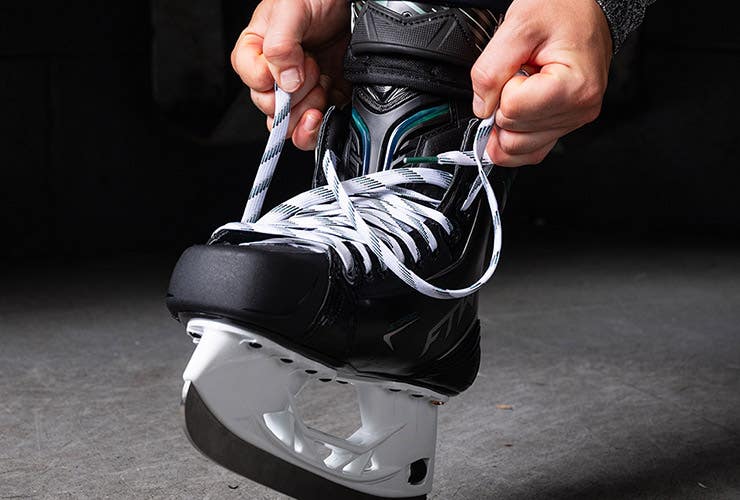
1. Ice Skates: The first thing that you must understand is that there are 2 different types of skates – those for figure skating and those for ice hockey. Player’s skates have a smooth edge from the front of the blade to the rear. Goalie skates are nearer to ground for better balance and are designed for the side to side movement. Be sure to check for ankle stability. Choose a skate that has extra features to support your ankles.

2. Helmet with Cage and Mouth-guard: One of the most important equipment purchases you will make is the helmet. Most helmets function the same but look very different. The biggest difference is the type of face mask it includes. Whether plastic or wire, most masks do not block your vision during play. Find what works best for you. There is no right or wrong type of cage.

3. Hockey Stick: Originally made of wood (ash, birch and willow), sticks are now primarily made of carbon fibers and graphite. These materials provide added flexibility and durability. When you’re standing in shoes, your stick should come at least to your nose. Always be ready with two sticks as hockey sticks sometimes break.

4. Hockey Pants: These specially designed pants provide cushioning for the thighs and legs and include stiff plastic inserts for impact protection. Most models also provide kidney protection and are somewhat loose fitting for freedom of movement.

5. Hockey Gloves: These provide protection to the outer part of the hands. The palm area is thin for better grip on the stick. Goalie gloves are different and are not interchangeable.

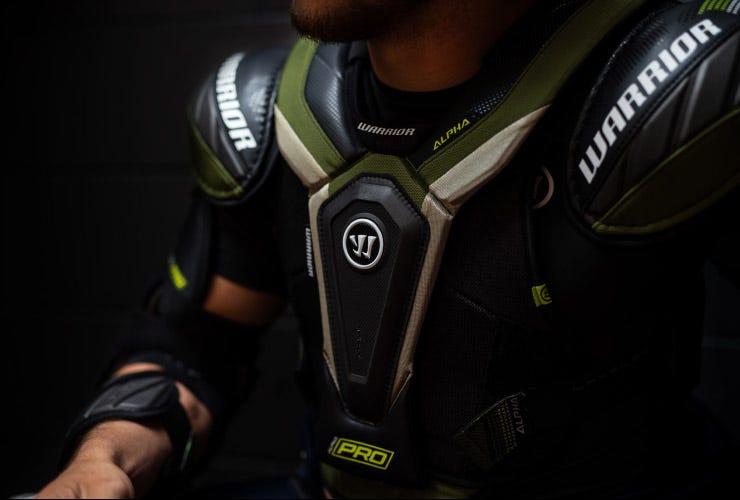
6. Shoulder Pads: For protecting upper torso, chest, shoulder blade, collar bones and rib cage. Be sure to check for the right combination of padding and range of motion.

7. Elbow Pads: Equipped with adjustable Velcro straps, these pads cover the forearm, elbows and triceps and help avoid injury from falls and pucks. As with most protective equipment, elbow pads are required in most every league. Available in Junior, Intermediate and Adult sizes.

8. Shin Guard: Knees are the most vulnerable since the risk of falls are great. Protecting your knee caps and frontal bones with the shin guard is absolutely essential. To fit shin guards, bend your knee at a 90-degree angle so the blade of the skate is flat on the floor. Start measuring at the center of the kneecap, all the way down to the top of the skate boot. The measurement in inches should match the length measurement of the shin guard.

9. Neck Guard: Serious neck injury can be prevented with a Neck Guard. An errant flying puck or opponent’s skates and sticks can result in season-ending injuries.

10. Jockstrap (men) or Pelvic protector (women): This piece of protective equipment is quite self-explanatory. Let’s keep ourselves properly protected.

  • Share/Bookmark

Read More » No Comments