Hockey Penalties: A Complete Guide to Penalties in Ice Hockey


Ice hockey is fast and physical, and the difference between a clean play and a penalty can be razor-thin. Recent NHL games and playoffs have shown this clearly, with high-profile penalties and controversial non-calls involving star players sparking debate over stick infractions. Like when Connor Bedard took a penalty for arguing a missed call after a breakaway, or when Connor McDavid was assessed a double minor for high-sticking in overtime during the 2024 Western Conference Final. Penalties are not enforced in isolation. Officials evaluate how a play affects puck control, player safety, and the flow of the game, and enforcement can vary by situation and level of play. Let’s break down the most common hockey penalties, how referees actually call them, how enforcement changes across leagues, and what players can do to avoid putting their team shorthanded.
Let’s break down what these penalties are, how they're enforced and how you can learn to spot them. We'll explore several aspects of the ice hockey penalty system by giving you information about:
- Penalty Classifications
- Types of Hockey Penalties
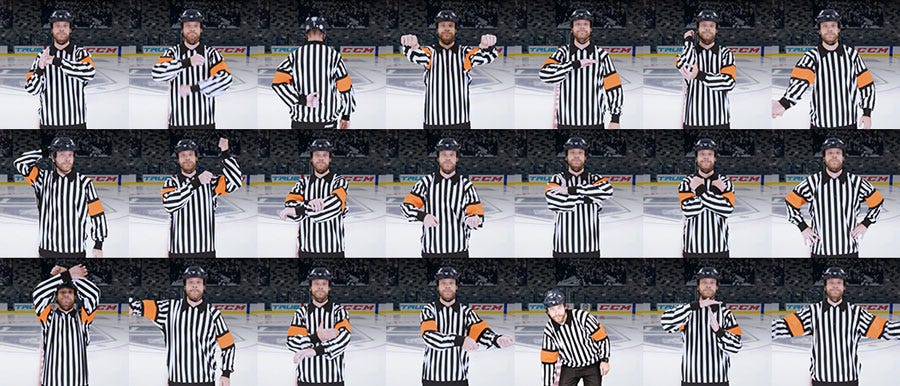
- Hockey Penalty Signals
- Hockey Penalty and Time Chart
- Rules of the Penalty Box
- Commonly Asked Questions
Penalty Classifications
Hockey penalties are broken down into several classifications depending on intent and severity, whether a player was injured as a result and the location on the ice.
Minor Penalty
A minor penalty is the least severe type of infraction. It results in the loss of a player for two-minutes, during which time the player must leave the ice and sit in a penalty box. During a minor hockey penalty, the other team has the advantage with an extra player on the ice. If the other team scores before the penalty is over, the player is released from the penalty box early. In some cases, an official may decide a minor penalty is worth more than two minutes, but is still not severe enough to warrant a major penalty. This will often be the case if a player was injured as a result of the penalty – in these cases a double-minor, or four-minute penalty can be issued.
List of Minor Penalties
Major Penalty
A major penalty is a severe infraction that warrants a stiffer five-minute penalty. During major ice hockey penalties, the offending player must sit in the penalty box the entire five minutes, no matter how many times the opposing team scores.
List of Major Penalties
Misconduct Penalties
A misconduct penalty results in a player being forced to sit in the penalty box for 10 minutes. These are penalties that are more severe than a major penalty, but still don’t warrant an ejection from the game. When a misconduct penalty occurs, the offending player must sit in the box for 10 minutes while one of his or her teammates serves the appropriate number of minutes for the initial infraction. Depending on league rules, the 10-minute timer on the misconduct penalty might not start until the two, four or five-minute penalty for the initial infraction has expired and the second player is released from the box.
Match Penalties
A match penalty is any infraction that results in the ejection of a player from the game. This is one of the stiffest penalties in hockey. The player must leave the ice while one of his or her teammates serves the time given for the penalty.
Penalty Shot
In some cases, the officials may call for a penalty shot rather than call a minor penalty. These are most commonly called when a skater with the puck has a clear breakaway path to the goal, but progress is impeded when an opponent stops him or her with contact that’s against the rules of the game. Depending on league rules, there may be other situations where a penalty shot is called, such as intentionally dislodging the net to prevent a goal.
If a hockey penalty shot is called, the puck carrier gets the opportunity to start at center ice and have one chance to skate in and score with no other players involved except the opposing goalkeeper.
Delayed Penalty
Most penalties are not called immediately after they occur. An official will raise his or her arm to indicate that a penalty has occurred, but will delay the stoppage of play until the offending team touches the puck.
Types of Hockey Penalties
There are many different types of hockey penalties, and several different hockey referee signals to indicate exactly what a player has done to deserve his or her time in the penalty box. Some penalties carry the option of being either a two-minute minor or five-minute major depending on any perceived intent to injure. There may also be league- and age-specific guidelines that make certain penalties more severe.
Boarding
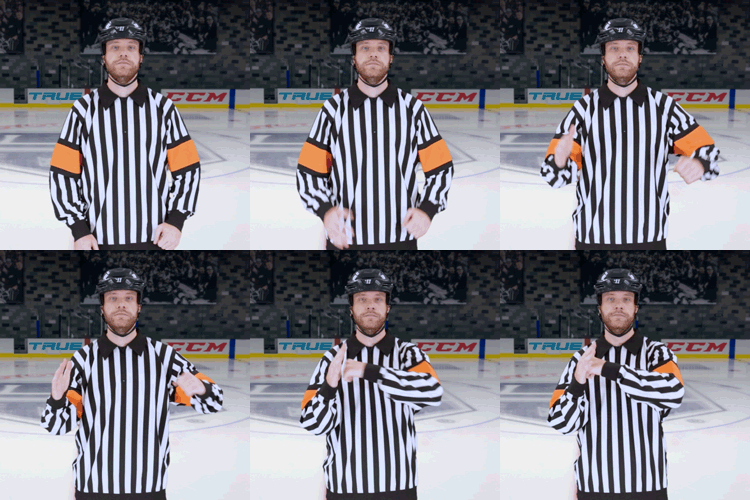
Boarding is any illegal action that causes a player to be thrown into the boards.
Length of Penalty: Two or five minutes
Charging
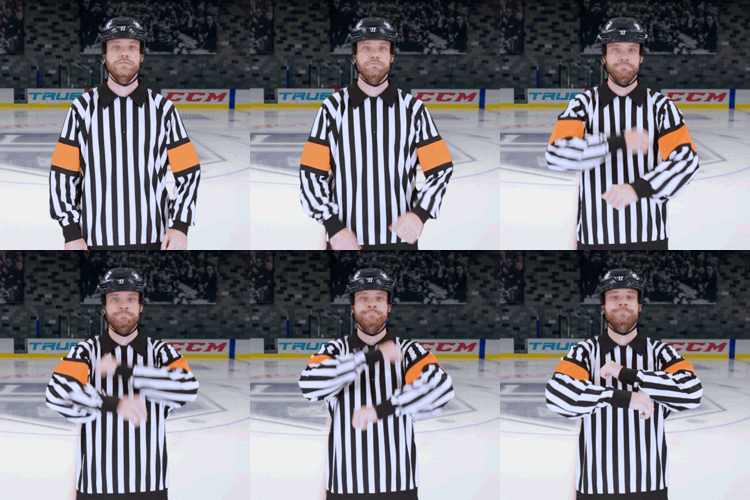
Charging is called when a player takes several strides to speed up when checking an opponent.
Length of Penalty: Two or five minutes
Cross-Checking
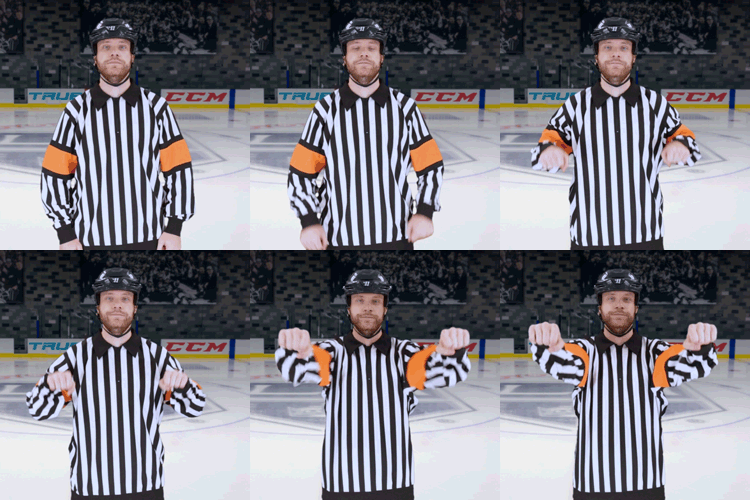
Cross-checking occurs when a player has both hands on the stick and uses it to deliver a check when no part of the stick is on the ice.
Length of Penalty: Two or five minutes
Elbowing
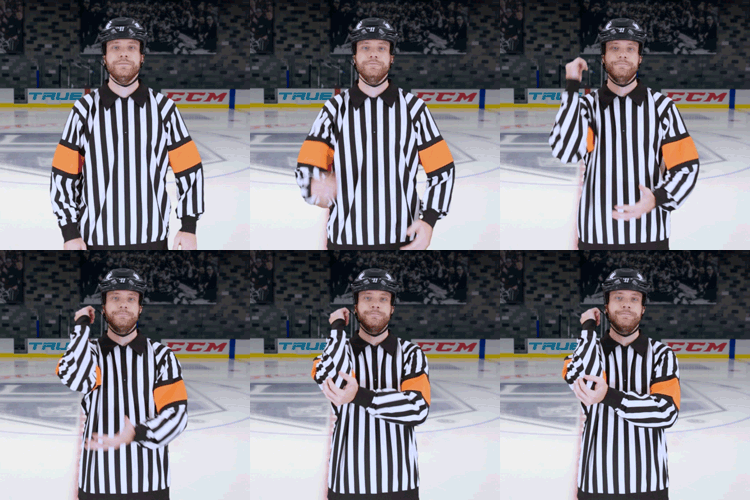
Elbowing is the forceful use of the elbow to foul an opponent.
Length of Penalty: Two or five minutes
High Sticking
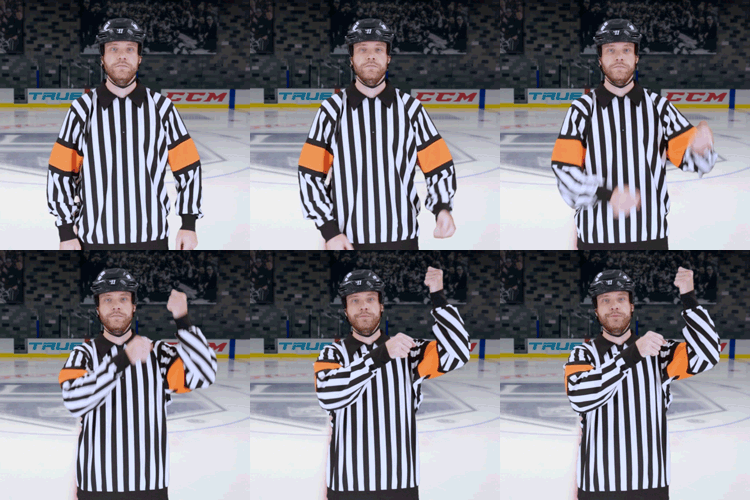
High-sticking is contact with another player with a raised stick.
Length of Penalty: Two minutes
Holding
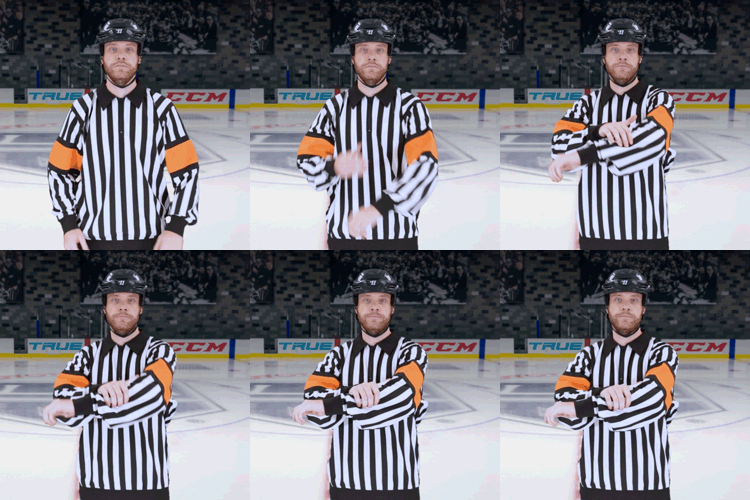
Holding is exactly what you think it is; holding or grabbing a player to restrict their ability to play.
Length of Penalty: Two minutes
Hooking
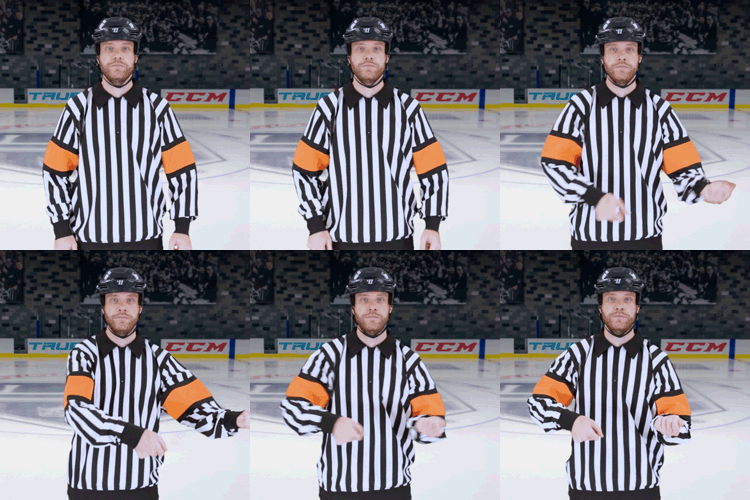
Hooking is the use of the stick to slow another player down.
Length of Penalty: Two minutes
Interference
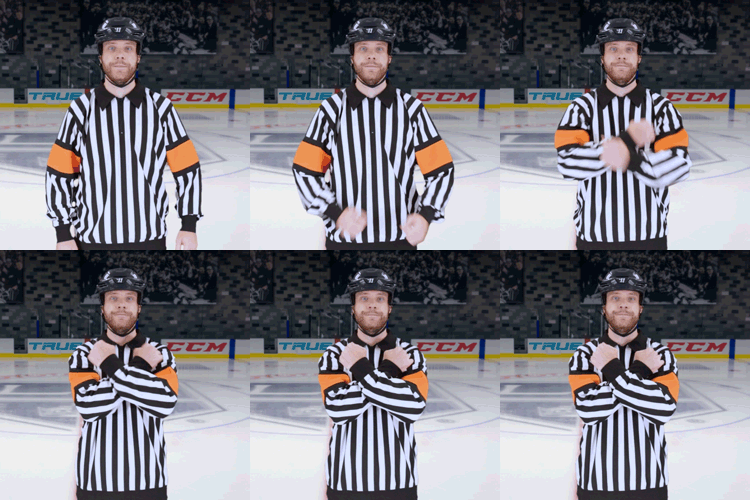
Interference is the use of contact to stop or slow down a player who’s not in possession of the puck.
Length of Penalty: Two minutes
Misconduct
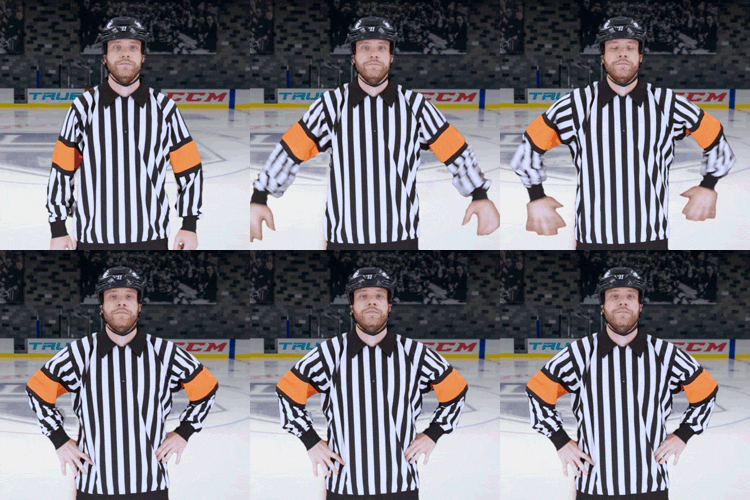
A misconduct penalty is any action deemed worthy of an extended penalty. Some examples include using abusive language, challenging an official's ruling or intentionally disrupting the game.
Length of Penalty: 10 minutes
Roughing
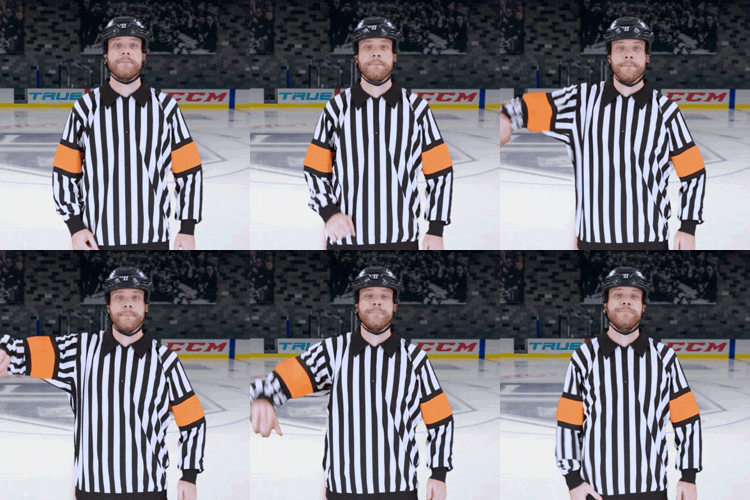
Roughing is any contact that’s unnecessary such as pushing and shoving or aggressive contact after a whistle.
Length of Penalty: Two minutes
Slashing
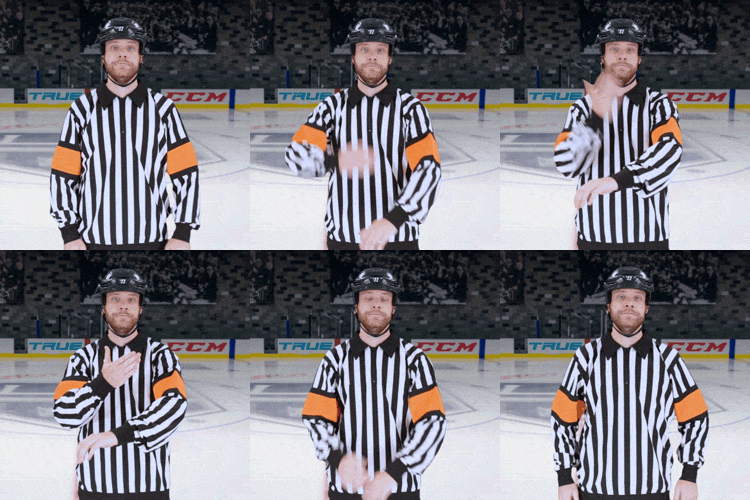
Slashing is just what it sounds like – swinging a stick in a forceful motion and hitting another player.
Length of Penalty: Two or five minutes
Spearing
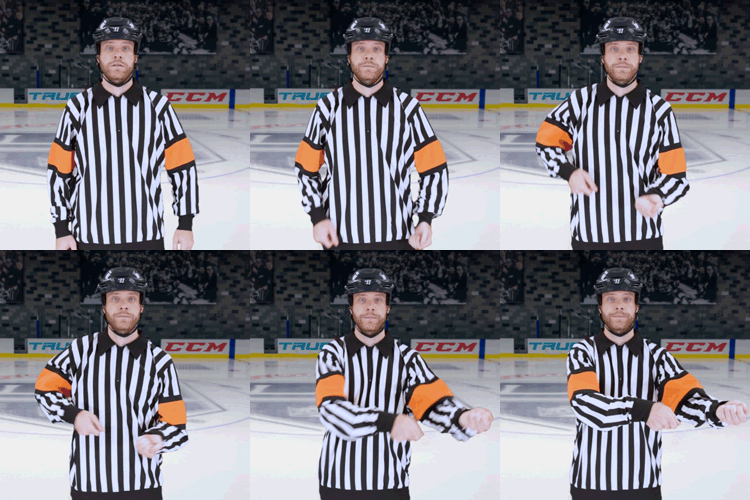
Spearing happens when a player stabs his or her opponent with the stick.
Length of Penalty: Five minutes
Tripping
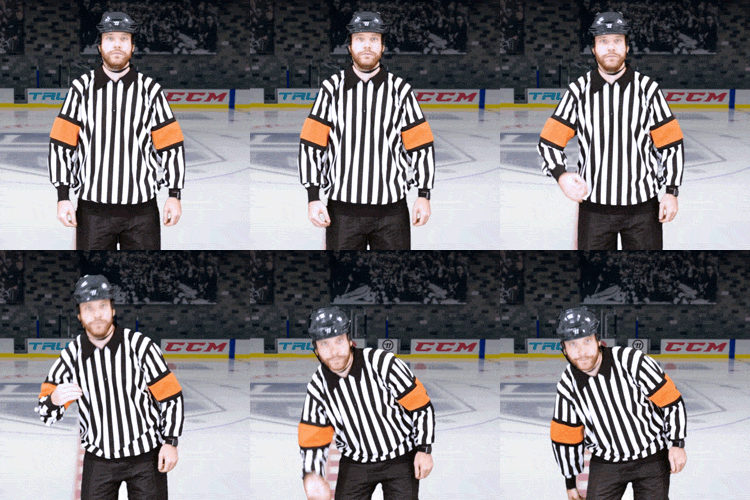
Tripping is the use of a stick or leg to trip an opponent.
Length of Penalty: Two minutes
Washout
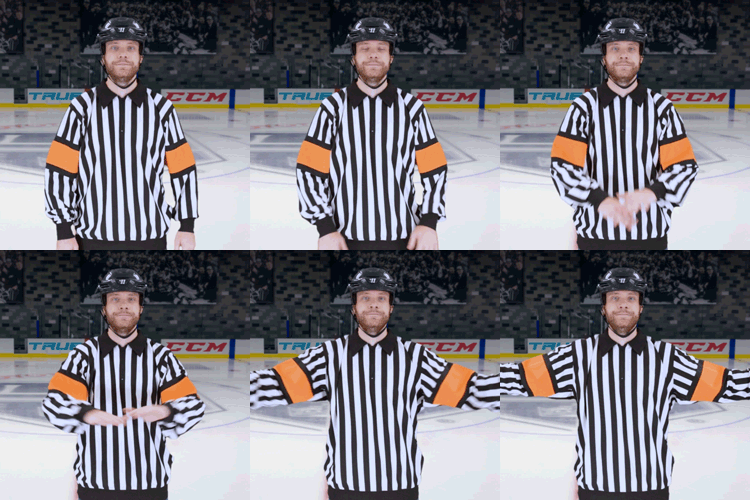
The washout signal from a referee is not a penalty call, but a sign that icing has been waved off or players are no longer offside.
Hockey Penalty Signals
Hockey Penalty and Time Chart
| Penalty | Classification | Time |
|---|---|---|
| Boarding | Minor | 2 or 5 minutes |
| Charging | Minor | 2 minutes |
| Contact to the Head | Minor | 2 minutes |
| Cross-Checking | Minor | 2 or 5 minutes |
| Delay of Game | Minor | 2 minutes |
| Elbowing | Minor | 2 or 5 minutes |
| Slashing | Minor | 2 or 5 minutes |
| Roughing | Minor | 2 minutes |
| Obstruction | Minor | 2 minutes |
| High-Sticking | Minor | 2 minutes |
| Kneeing | Minor | 2 minutes |
| Holding | Minor | 2 minutes |
| Holding the Stick | Minor | 2 minutes |
| Interference | Minor | 2 minutes |
| Hooking | Minor | 2 minutes |
| Unsportsmanlike Conduct | Minor | 2 minutes |
| Tripping | Minor | 2 minutes |
| Butt-Ending | Major | 5 minutes |
| Checking from Behind | Major | 5 minutes |
| Fighting | Major | 5 minutes |
| Fight Instigator | Major | 2 minutes |
| Holding/Grasping the Facemask | Major | 5 minutes |
| Pushing-off of Opponent with Skate | Major | 5 minutes |
| Misconduct | Major | 10 minutes |
| Spearing | Major | 5 minutes |
How Referees Decide to Call a Penalty
Hockey penalties are not called solely by definition. Referees are trained to evaluate impact, advantage, and safety, not just whether contact technically occurred. Two plays that look similar can be judged differently depending on the situation. Officials typically consider:
-Whether a player gained an unfair advantage
-Whether the action put an opponent at risk
-Whether the contact was avoidable
-Whether the stick, body, or skates caused loss of balance or control
This is why minor contact may go uncalled in one situation but result in a penalty in another. The standard is not perfection, but whether the action affected play or player safety.
Quick-Reference Table
| Penalty Type | What Officials Look For |
|---|---|
| Tripping | Loss of balance caused by the stick, body, or skates | Hooking | Stick restricting movement | Slashing | Force and follow-through | High-sticking | Contact above the shoulders | Checking penalties | Timing, angle, point of contact |
How Players Can Avoid the Most Common Penalties
Many penalties are preventable with proper habits.
-Move your feet instead of reaching with the stick
-Keep your hands in front of your body
-Control stick height in traffic
-Finish contact through the body, not the arms
-Avoid retaliation, which is almost always penalized
Good positioning reduces penalties more effectively than aggression or strength.
Rules of the Penalty Box
Players who commit ice hockey penalties must serve their time in the penalty box. The penalty box is an area connected to the ice, but isolated from the player's bench. In most cases, the penalty box is adjacent to the time- and score-keeper's booth at center ice on the opposite side of the playing surface from the bench. When serving a penalty, players are required to sit until their time is up. An official in the penalty box will open the door and release them at the appropriate time. Players usually do not have to wait for a stoppage in play; they can be released while action is occurring on the ice.
Common Questions About Hockey Penalties
Are penalties in the NHL the same as college, high school and youth leagues?
No – penalties in the NHL are not the same as college, high school and youth leagues. All levels of play have different penalty enforcement rules. Many of the same penalties exist at all levels, but younger players may have stricter guidelines on what and how much contact is allowed.
Do specific officials look to call on-ice penalties?
The referee is responsible for all penalties, while the linesmen watch for offside, icing and two-line pass infractions.
What is the penalty for fighting in the NHL?
The penalty for fighting in the NHL starts with both players involved receiving at least a five-minute major penalty – additional penalties, such as ejection from the game, can be given if the referee deems it necessary. Players may also be fined for fighting.
Which penalties have been added to improve player safety?
Most penalties exist to protect players. Major penalties, such as boarding, slashing and charging, exist to prevent intentional injuries. To improve player safety, some youth hockey leagues have added penalties for body-checking and certain types of contact that’s otherwise allowed in older age groups.
Why does the same play get called differently in different games?
Officiating standards vary slightly by league, level, and game context. Referees focus on safety and advantage, not strict uniformity.
Can accidental contact still be a penalty?
Yes. Intent is not required for most penalties. Outcome matters more than intention.
Why are retaliation penalties so common?
Officials often miss the first infraction but clearly see the response. Retaliation almost always draws a call.